Tag: FCA

  • General Relativity of Poverty and Possibilities

    General Relativity of Poverty and Possibilities

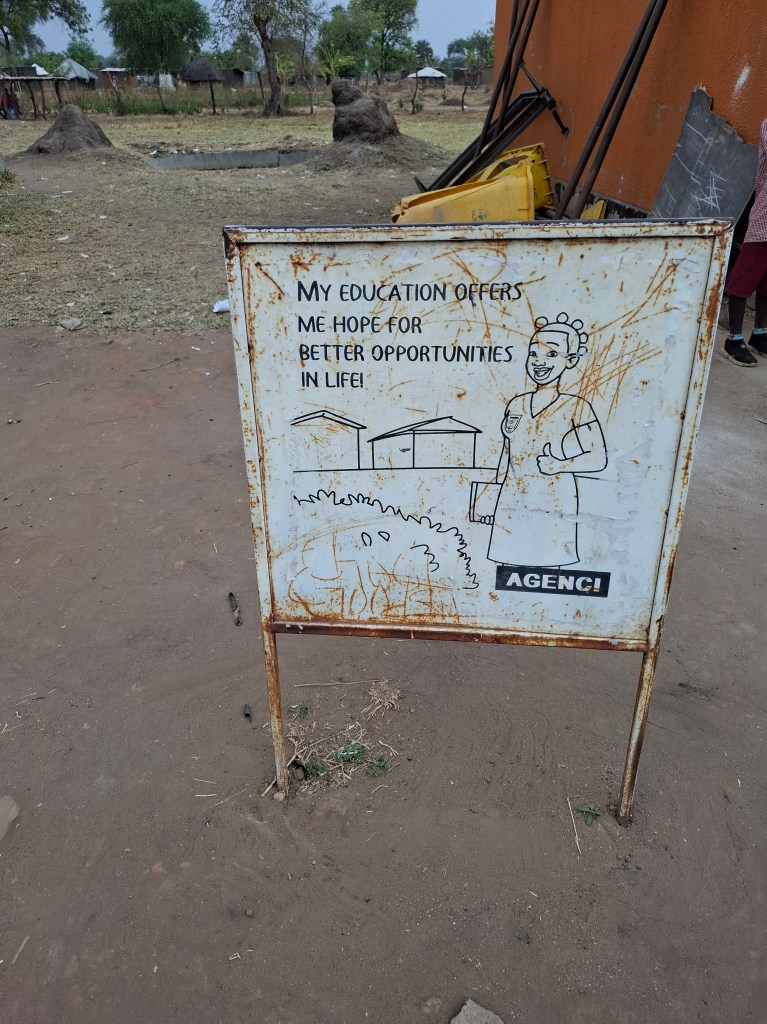
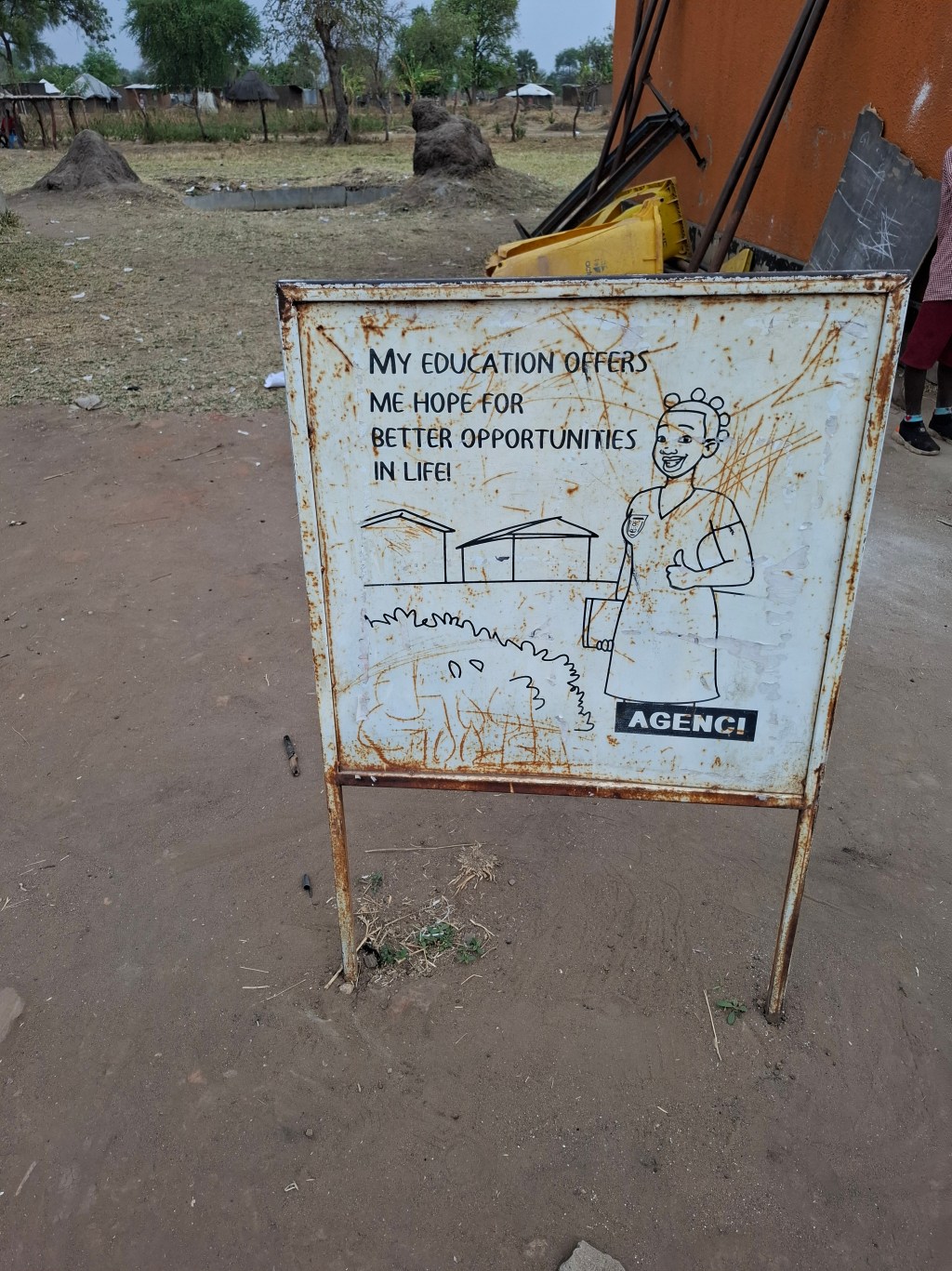
    Children of educated parents are a lot more likely to educate themselves, live a longer and a healthier life and end the vicious cycle of poverty. Poverty often makes long-term investments unaffordable. For example, my father’s big brother gave up on his education when their father got terminally ill to provide for the family. This enabled him to drive a truck and pay for his siblings’ education – sacrifice keeping him alive in conversations long after his time in this world came to an end.

    Imaginations Without Borders – Driving limitless possibilities .

    Now, I want to engage the reader—but first, a quick word from Teachers Without Borders!

    Keeping Learners at School – Pads, Lunch and Motivated Teachers

    While many activities are challenged by the abrupt end to US funding, ECHO TOGETHER project funded by the European Union Humanitarian Aid is fortunately in full action in different parts of Uganda. Many local NGO´s collaborate with FCA to provide holistic support in the local communities. While Teachers without Borders is especially involved with delivery of quality education in supporting teachers’ professional development and well-being, the objectives of strengthening local communities, improving school-based protection mechanisms and increasing access to education via concrete means are obviously linked to each other.

    This stint we have mostly spent in different parts of the Palorinya settlement, home to about 140 000 refugees, about half of which are of school age or arriving there. We have been interviewing entrepreneurs in the local villages to collect data on their training and other needs for scaling up their businesses, assessing menstrual hygiene management, facilitating teachers in crisis context sessions with teachers from different schools, holding sessions on the principles of children safeguarding and child protection, supervising lessons as well as discussing pedagogy and school leadership with teachers´ and school management.

    The Big Five of Classroom Management – Brainstorming Solutions

    Key aspect of our work are the Teachers in Crisis Context trainings. It is in these sessions that we get the chance to dive deep into pedagogy and learn from each other. Having planned a couple “Sports & Parent-Teacher Collaboration Day” Saturdays in Finland I can also imagine the cries for revolution a two day teacher training for the weekend would incite, yet participation rates for TiCC-trainings remain high. 

    I am impressed by the teachers’ hunger to learn, get feedback and develop their teaching despite most of them being seasoned professionals. I myself would be horrified to have somebody pop-in with a form in hand to evaluate my lesson, a sentiment a Finnish teacher reading this most likely empathizes with. While the 40 degree heat (Celsius) poses its challenges for designing a full day training, the problems are far outweighed by the ease at which the teachers are warmed up for discussions, role-plays and brainstorming solutions for challenges identified.

    Presenting applicable proactive classroom management strategies.

    The teacher´s concerns sound familiar, keeping in mind that the scale is different in many cases. Overcrowded classrooms of 100-250 learners and lack of scholastic materials challenge classroom management and lesson planning. Concern for learner well-being, tensions between learners and powerlessness to support all those in need. Concern for job security after so many abrupt layoffs and draining of resources in the settlement despite Uganda just passing the 1 million refugee children mark amidst Labour Day celebrations. Personally I would be challenged if I had to bring my small children to work every day, but as nobody complains about that I figure it is better to shut up. To be honest, I may be the one learning the most here.

    Via Teachers without Borders one is directly involved in bringing high-quality education for all. With 15 million new teachers required in Sub-Saharan Africa by 2030, agile learning opportunities alongside working must be provided. While teachers also have a role to play in learner attendance at school, other forms of support are required to amplify the impact the teachers are making. Barriers to education and solutions to those barriers can be practical. For example, girls’ education is often affected by harmful cultural beliefs in relation to menstruation leading to regular absences, which are a risk factor to school drop-out. Hence, the reusable menstrual hygiene kits and soap distributed directly and cost-effectively supports girls attendance. 

    Plague or Cholera?

    Out of school girls are at high risk for early marriage and pregnancy. Sometimes these choices are tied to pragmatic economic solutions. Say the arid land does not provide the crops necessary to feed the family and food rations have been cut as UN has a funding shortfall of 60 %. School fees further strain finances. What options do you have as a parent or a child? To be clear, this is not a game for thousands of families. 

    You may risk security by going back home for familiar livelihood opportunities. Having heard of the horrors that happened to someone from the neighboring village you backtrack on that plan. Marrying an older man to take care of that household as a solution for financial and food security issues might soon appear tempting to the parents, perhaps to the girl also. On the other hand, boys are at risk of being exploited for labour in mining or fishing depending on the local opportunities available. These actions provide short-term solutions to hunger whereas education is a proven path to stop the cycle of poverty. You are mindful of the matter, yet sometimes you can not afford to think long-term. Many end up reflecting on giving up their education, figuring that their sacrifice will help their younger siblings pursue that path. Would you?

    Some Parent-Teacher Associations such as the one at Luru Primary School have managed to conjure up funds to provide a school lunch. Schools that are able to provide lunch see significantly higher attendances in the afternoon lessons. There will be more financial pressure on the families funding the program as Western countries minimize or withdraw funding to the UN risking efficiency of food aid.
    School lunch is always posho, which is maize flour mixed with water, and beans. Picture taken at Big Mike’s Diner in Moyo town. © Marjut Väihkönen 2025.

    I always saw my uncle trading education to driving a truck as an example of the nobility of serving others, and of course as an example of the crippling effects of poverty. That may still be the case, although I now see how privileged is the one who has access to a truck. 

    A father, an entrepreneur and a pensioner enjoying the fruits of luck and labour.

    Most people have their heart in the right place regardless of their occupation, whether it be in education, healthcare, retail, business, technology, manufacturing and so on. Readers like you are often already active in improving communities through work, volunteering, donations, or all three. Thus, it would be fair and productive to ask more from the influential individuals, enterprises and organizations ignoring their part on the platforms available to you. Meanwhile you may consider that the FCA  is considered among the more effective charitable organizations. Christmas, birthday, confirmation or graduation coming up? Consider an alternative gift.
  • A Letter to Hypocrisy

    A Letter to Hypocrisy

    The unprecedented and very literally immediate withdrawal of US foreign aid will directly lead to increased child labour and marriages, teenage pregnancies and suicides, unless the gigantic hole their departure has left behind can be compensated for.

    Many different stakeholders need to effectively communicate for child protection in a crisis context.  

    Children fleeing war deserve appropriate resources to ensure appropriate protection – this requires seamless collaboration between governmental and non-governmental institutions in the humanitarian context. When the mission is accomplished, or in the unfortunate event of having to leave before that, effective institutions inform collaborators of a transition period and pass on the reins accordingly.

    To whom it may concern,

    In the Spring of 2018 I befriended a wonderful bloke from the US during exchange studies at Uppsala University. We were standing in line at one of the student nations night clubs when he asked with a straight face whether the travel water filter his mother had bought him would be useful in a country like Sweden. One of the most sincere and also intentionally funny human beings I will come across. Funny, considerate and passionate about his course on dinosaurs in the least nerdy way one can be passionate about a course on dinosaurs. Always willing to share whatever he had. 

    One day our friendship was spiced up but never stained by his innocent open question: “What do people here think of Trump”. Despite quoting from memory that about 9/10 disapprove of him and sharing an unusually honest opinion, (although in retrospect it may have been closer to ¼) him turning out to be a die-hard Trump never interfered with our friendship. Not surprised that such a personality had a tight friend group, we had a hilarious party when his friends flew for a round-tour of Europe. Having obviously been primed to the setting, only their MAGA-hats would differentiate the somewhat immature yet kind-spirited frat boys from our somewhat immature frat boys. 

    A Gift of the United States Government

    Over the course of last month or so we have seen the serious repercussions of impulsive decisions being felt in communities by the thousands. Closing offices and terminating contracts of people delivering services such as education, child protection or reusable menstrual hygiene kits in a humanitarian context for peanuts are tragedies on an individual level. To expand, school drop-out, child labor, child marriage, teenage pregnancies, suicides, which had been diminishing before, WILL be on the rise due to ACTIVE decisions made in Washington D.C.

    Traumatized communities of thousands and thousands are again restless in their new home country seeing opportunities (and food rations, although that is another topic) taken away or shrinking. This of course includes the teacher lucky enough to still hold their post, most refugees in the settlements themselves, delivering lessons and making sense of the situation to the 200 learners sitting in their classroom. In the morning that is, attendance in the afternoon lessons tend to decrease due to the “reprioritization” of food rations due to funding shortages affecting participation in the absence of school lunch.

    Teachers are at the front of the war for peace. Take the example of the Good Samaria Primary school, where the construction of 4 classrooms  changed the learner to classroom ratio from 1:385 to 1:250. The rough terrain, hot and overcrowded classrooms, lack of learning materials and the varying backgrounds of learners challenge the teachers. Talks of budget cuts and lay-offs in the settlement further strain the wellbeing of teachers as they worry for futures of the learners, the community and themselves. Yet I was left impressed by the dedication of the teachers, thorough lesson plans and especially the dozens of engaging routines, dances and songs used to (re-)direct attention, appreciate and promote active participation and foster unity in classrooms. The significance of unity can not be understated when tensions and trauma from the South-Sudan conflict inevitable affect dynamics in the communities too, especially when food and water resources are scarce. A significant source of stress is naturally concern for the well-being of learners, with abrupt end to funding exacerbating the problem.

    Good Samaria Primary School. You may remember the biblical Good Samaritan story, where the Samaritan—a member of a despised minority—helps an injured man after others of his own community neglect him. Among those neglecting are well-off people of high social status. The Samarita´s act challenges the prevailing social biases of the time, emphasizing that “love thy neighbor” extends to all, including those seen as outsiders. One could say it shows how compassion and humanity transcends borders😵)

    “Development aid induces passivity” is a common rebuttal for development aid used to justify cuts, usually accompanied by juxtaposition to what could be done with the resource instead. A fair argument in some instances but in some cases outdated. How do those arguments hold in relation to overnight shutdown of funding for empowering structures such as trainings for Village Savings & Loans Associations, peace clubs or… a school? Or investment in the capacity of teachers at the forefront of peace and prosperity for lasting impact? 

    To be fair, this is not just a US  issue. In my country it is often argued that instead of accepting refugees they should be supported closer to the countries of departure as it is cheaper, which is of course already the case. Uganda alone hosts 1,8 million refugees. The sentiment was recently reflected in my country´s decision to reduce its annual intake of refugees to 500, which is in line with the long-term trend. Fair play. Reflecting the spreading self-centeredness in the West and collective cognitive dissonance of “soulless Europe”, the same actors simultaneously slashed development aid while also campaigning on and promoting “Judeo-Christian values”. There is an obvious contradiction between both logic as well as outspoken values and objective reality. of all the players involved in these decisions voiding the credibility of the message and the messenger. I am sure this enlightens why some would consider us barbaric at worst or full of shit at best.

    That inauthenticity I suggest, should be expanded and verbalized any time the topic is mentioned from the paper to the local pub argument. While the matter is of course political you don’t even need to change parties. At the very least you may contact your representative and demand they lobby your concern. Leaving that responsibility to NGO´s and civil society, often recipients of funds, may “reinforce the perception that aid funds bloated bureaucracies rather than real solutions” *. Communicating to a representative does not take long and is easily within your power. Or accept that the well-being of hundreds of thousands of learners, mothers, teachers, entrepreneurs and such is not important to you personally and how that reflects on you. Europe by the way is starting their negotiations for a future financial framework. I am confident that if the majority is active and listened to, positive change will come. 

    *Seeing folks here write applications for funding in the evenings having spent the day in the settlements having eaten nothing but a couple biscuits makes you think. People working on something self-evidently valuable are begging for crumbs so they could continue sacrificing most of their time awake away from their families supporting those in need. This seems perverse especially considering that much of the private wealth created in and from different parts of the globe is recycled through the US (Wall Street) not benefitting said country´s citizens education or healthcare either. Yet 0,24% of gross national income for these causes was a step too far. But that’s just like, uhh, my opinion, man.

    YOU (me) have a responsibility, whether you vote on these matters or not. I encourage to be honest with what your values are and not to hide from the consequences of your actions. As long as one is not lying to themselves and/or others, I can appreciate the informed viewpoint on any matter. Just be mindful that these things are happening because millions of people gave their backing to it; teammates, colleagues, barbers, “bro´s” or whoever. You may be one of them. In fairness, perhaps most would not have, if they had understood or believed the consequences and took an honest look in the mirror? Or if they had heard and registered the multiple “thank you´s” on the ground?

    I opine that this straight-forward logic should be made abundantly clear whenever these matters are discussed. On that note, much of the positive impact already achieved in communities here and elsewhere will be lasting and support from elsewhere can be rallied for and should be available. This is just a matter of active collective organizing of labour and resources similarly to how things have been actively disorganized.

    In this school, enrolment increased by more than 200 learners over the course of 2024. Ninety-nine per cent of learners are refugees. Responsibility.

    One more thing on the matter: if a city the size of Vantaa or Uppsala received hundreds of learners on a monthly basis there would surely be cries for support from other countries to sustain the education system despite its esteemed status and relatively strong resources. Simultaneously issuing budget cuts overnight forcing teacher lay-offs would be a disaster, and the remaining teachers’ well-being considering both the increased workload and worry of their own job security would be broadcast daily. Uganda hosts a dozen similar settlements to Palorinya. Despite the influx of new learners, previous efforts from many different stakeholders (also effected by budget cuts) have been rewarded with tangible results in increased enrollment, retainment and literacy among other things. Such results are possible despite a likely influx of newcomers with appropriate support to the local communities including the teachers. If neglected we are to witness what suffers the most when two elephants fight: the grass.

    In a perhaps soon-to-be-closed office in Moyo, I wonder whether this extinction-level news ever reaches the screens of churches and living rooms in the Midwest—or if it does, whether it is dismissed as fake news, as long as one was not there to witness the asteroid with their own eyes.

    Most people have their heart in the right place regardless of their occupation, whether it be in education, healthcare, retail, business, technology, manufacturing and so on. Readers like you are often already active in improving communities through work, volunteering, donations, or all three. Thus, it would be fair and productive to ask more from the influential individuals, entrprises and organizations ignoring their part on the platforms available to you. Meanwhile you may consider that the FCA  is considered among the more effective charitable organizations. Christmas, birthday, confirmation or graduation coming up? Consider an alternative gift.
    The next cycle of the recruiting process for TwBs opened up 18th of March 2025. The whole application process will be in English.

  • Keeping Uganda Great Again

    Keeping Uganda Great Again

    This is the first of a pair of posts, “The First Week as a Teacher Without Borders (TwB) volunteer in Uganda”, in which the topics Keeping Uganda Great Again” and “What Happens When Two Elephants Fight” are addressed.

    The next cycle of the recruiting process for TwB is opening up 18th of March 2025. The whole application process will be in English.

    Allow me to open by addressing the painful personal loss of the child inside me, which has something to do with running 2.5km to a mobile service provider and back at noon on the streets of Muyenga for reasons I may or may not be willing to disclose later.

    Destined for greatness, my first grade began victoriously as I was crowned champion of the Hyvinkää Village Schools in the long jump. Inspired by Samppa Lajunen’s treble of gold medals in Salt Lake City just half a year later, I knew bringing glory to Finland in skiing would make the already bursting trophy cabinet a source of pride for my grandparents, as passionate armchair athletes as any. Not to be disheartened by a meagre 13th-place finish in the Hyvinkää skiing competition a couple of weeks later, I set up a more realistic target to emulate Haile Gebrselassie at the Summer Olympics, albeit representing Eritrea. I have reason to believe his thumbs-up, all-smiles approach to running made it seem simpler than it is.

    That could have been any of us if we were special.

    Turns out not all 50 million Ugandans are passionate runners, the first of many simplified myths to be busted, I presume. I suspect not even all of the Kalenjin. Based on the bewildered looks and the absolute highlight of my jog, the “Uuwii, what are you doing, man?” comment from a bloke chilling beneath a tree I cannot name, I ought to integrate and adjust my day according to the sun.

    Sunrise is fruit-platter time. It’s better to be active until right after noon, a time best suited for engaging with colleagues, family, or just about anybody over lunch. My favorite place in Kampala so far is the gazebo at the FCA office, a source of intellectual and nutritional nourishment. Somehow, people manage to stay productive until five, when it is time to face the rush-hour traffic. Generally, it seems work and spare time blend here, as people tend to respond quick even after office hours when needed.

    My colleague and I have successfully claimed the gazebo as an unofficial TwB office with minimal resistance.

    Alas, I find myself making a brief stint into the mobile service provider and collecting a local sim-card just to turn around and face these climbs again.

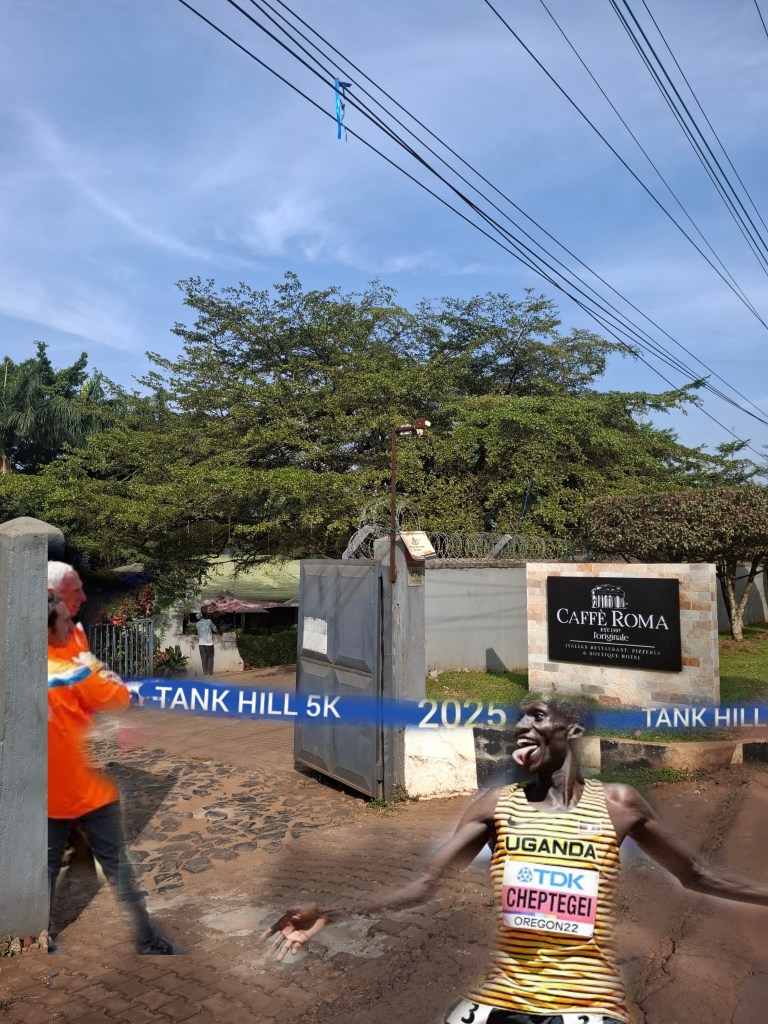
    “You are ordinary”, exclaimed The Tank Hill.

    Now, having run 5 km in Muyenga, these childhood dreams have taken their last painful breaths, vaporized under the equatorial sunshine in Kampala, left in the dust of Joshua Kiprui Cheptegei (2 years my junior) sprinting away on this last climb on Tank Hill Road before cruising to victory over the finish line adjacent to the well-guarded gates of Caffè Roma l’originale Italian Restaurant, Pizzeria & Boutique Hotel. “You´re late”, exclaims mr. Cheptegei cheerfully.

    If it takes more than 12:35.36 to reach the MTN teleoperator and back, you’d better start focusing on teaching or whatnot.
    Some water for the champions & armpits and off to the first meeting.

    With no time to rebuild an ego, I rush to meet up my TwB pair at the Finn Church Aid (FCA) country office in Kampala for our first meeting. The freeze of US foreign aid last week has implications to the education of 180 000 refugee students and therefore personnel with immediate effect. This has made us volunteers extra wary of our presence; namely, am I of help or literally and figuratively standing in the way. Unable to compare to previous meetings we still feel an added element of tension in the room. The school year also started on the Monday so the agenda is packed. 

    Having been present in meetings a hundred and eleven times, I first notice the effectiveness of this meeting of 20+ people. The chairwoman yields the floor to the different departments, each of which has prepared its comments. It is emphasized that everybody has a chance to comment before moving on to the next topic. Somehow, everybody is on point, and nobody is addressing what happened to their cat, the neighbor’s dog, or even the very relevant and acute policy matters echoed on CNN just minutes ago.

    To all Finnish organizations it should be noted I am looking for work in August and willing to consult on Ugandan FCA efficiency.

    It does not take long before the security, finances, land projects, water projects, communications, logistics, and different materials of the ~50 million strong nation in general, and refugee settlements in particular, have been comprehensively addressed and a shared situation overview is constructed.

    It seems that senior management appreciates the professionals, as they are practicing the “two ears, one mouth” approach until now. “Before going any further we should circle back and do what should have been done first – introduce the respected Teachers without Borders volunteers.” 

    Now, as showcased by the masterful storytelling of Wilson Kirwa (no idea if he has published in English), whose work I highly recommend for people between the ages of 0 and 200, the best stories use imagination as a vehicle to pass on a lot more important ideas than the empirical truth ever could. However, here is a direct transcription of the words drifting from the vocal cords, amplified by the odor of perspiration flowing in their wake:

    “Hi! We were briefed that Ugandans in general dress up well, of which we are desperately self-concious now (laughter). We did the best we could. We appreciate that we come in at a difficult time (nodding in acknowledgement). Therefore, our first priority is to not be in your way, and the immediate second objective is to be of the small help we can (encouraging nodding). We would also like to point out that we have learned that FCA and Uganda have faced challenges on many fronts before and overcome them, most recently during covid-19. We offer a word of encouragement, in that together we can KEEP UGANDA GREAT AGAIN!” (laughter).

    Ego restored.

    As if sensing our (or maybe it´s just me) insecurities, the professionals at the FCA country office have made it clear that the volunteers input is much respected. We have received expansive briefings on acute matters regarding the refugee settlements and suggestions on how to best support the teachers there. It becomes clear that we stand on the shoulders of giants to an extent thanks to the FCA´s long-term and high-quality commitment to the settlements (some changes have occured since that piece was published, mainly more impact). In other words the structure is already in place for a productive stint whenever a volunteer is sent to a these locations – encouragement for any teacher pondering whether to apply. Obviously the lasting impact in the end is made by the thousands of teachers in the classrooms.

    Representing Teachers without Borders does not seem too bad.

    Us volunteers will be dispatched to the Moyo field office Sunday morning. We are expecting a 10-hour drive with minimal stops and a ferry crossing over the Nile. There will be a lot to learn not only from the FCA personnel on the field but also other stakeholders in the area. Hoping to post about the first week before there is too much to post about the second.

    Most people have their heart in the right place regardless of their occupation, whether it be in education, healthcare, retail, business, technology, manufacturing and so on. Readers like you are often already active in improving communities through work, volunteering, donations, or all three. Thus, it would be fair and productive to ask more from the influential individuals, entrprises and organizations ignoring their part on the platforms available to you. Meanwhile you may consider that the FCA  is considered among the more effective charitable organizations. Christmas, birthday, confirmation or graduation coming up? Consider an alternative gift.